Structured funding for bigger business goals.

A Business Term Loan can help business owners access a lump sum of capital for larger business needs, planned investments, expansion, equipment, renovations, inventory, refinancing, or long-term growth. With a set repayment structure, term loans can help businesses plan ahead with more predictable financing.

At Red Rock Funding, we help business owners explore term loan options with a more personal and practical approach. We take time to understand your business goals, funding amount, timeline, and repayment needs so we can help identify a financing path that may fit your situation.

Business term loans are generally structured as a lump sum that is repaid over a fixed term, often with regular payments that include principal, interest, and applicable fees.

A Business Term Loan helps business owners access structured capital for larger needs such as expansion, equipment, renovations, inventory, or long-term growth. Red Rock Funding helps you explore options with clearer guidance and a more tailored process.
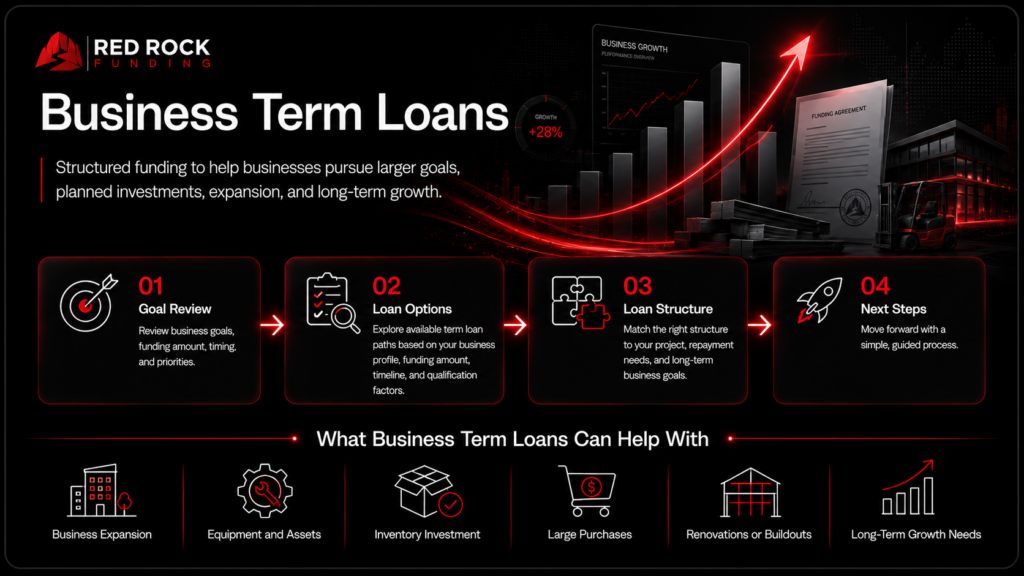
Business Term Loan Process

We start by learning what the funding is intended to support, including expansion, equipment, inventory, renovations, refinancing, or other major business needs.

We help explore available term loan paths based on your business profile, funding amount, timeline, and qualification factors.

We focus on identifying a financing structure that fits your goals while keeping repayment clarity and business planning in mind.

Once a direction is selected, we help guide the next steps with clear communication, responsive support, and a more straightforward process.

  • 02. Loan Options

What a Business Term Loan Can Help With

A business term loan can help support larger or more planned business needs where structured funding may make sense. Whether your business is preparing for expansion, purchasing assets, improving operations, or making a significant investment, Red Rock Funding helps you explore options with a clear and business-focused approach.

  • Business Expansion
  • Large Purchases
  • Equipment and Assets
  • Renovations or Buildouts
  • Inventory Investment
  • Long-Term Growth Needs